
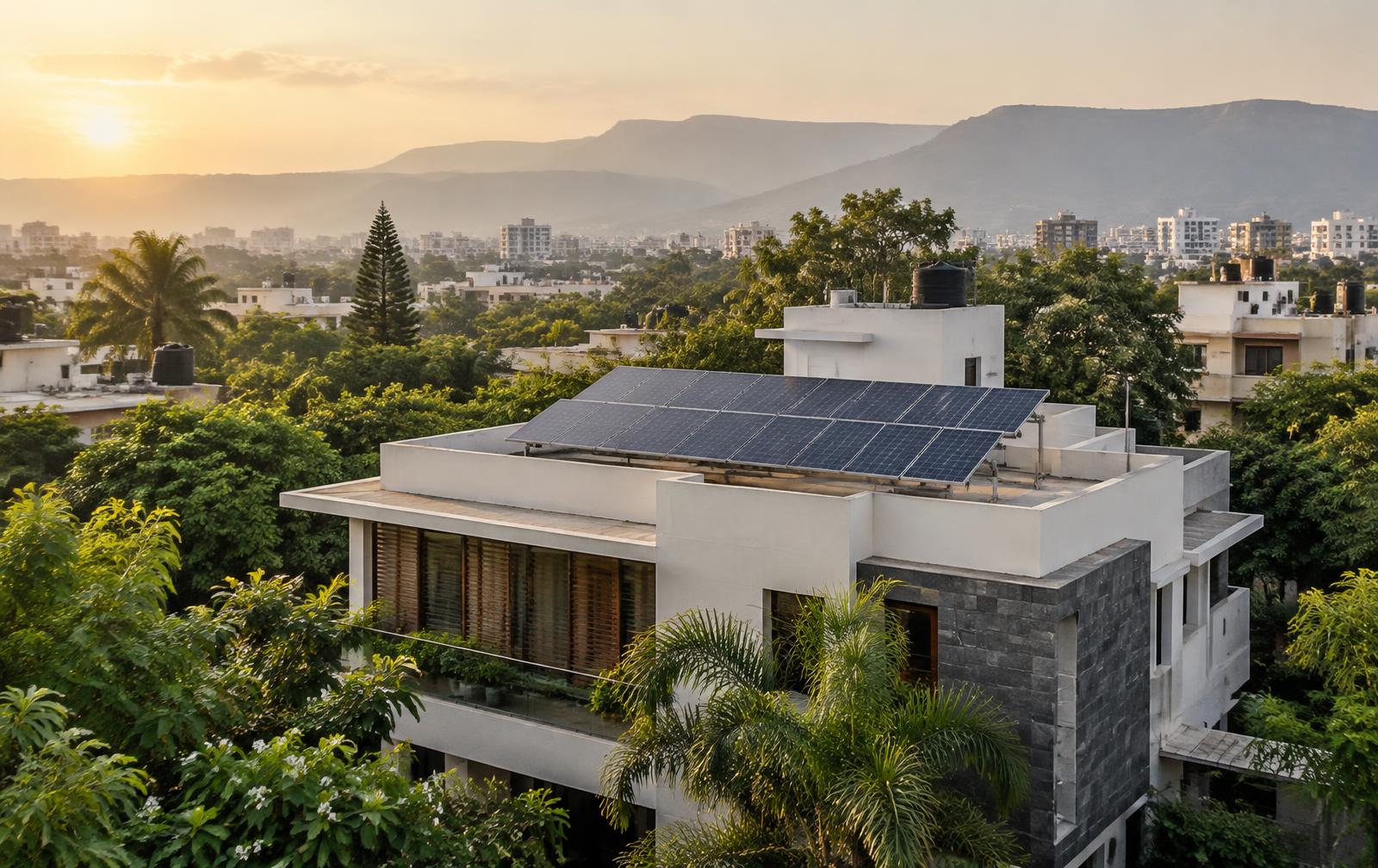
Why solar
Should your home go solar? It depends. Here’s on what.
The honest version: why people consider it, what makes one roof different from the next, and what shapes the money — before anyone quotes you a number.
Why people look at solar
It usually starts with something at home, not the panels.

A household we often meet
Two air-conditioners, a summer at home, and a bill that jumps every May. You want to know if the roof can take some of that load.
- When you use most electricity
- How much the roof can realistically produce
- Your tariff and connection
Which sounds like you?
Most homes have more than one reason. Pick the closest — you can change it during the assessment.
Is your home different?
Same sunshine. A different answer for every roof.
Tap around the house. Each of these can change what makes sense — which is why we ask about them.
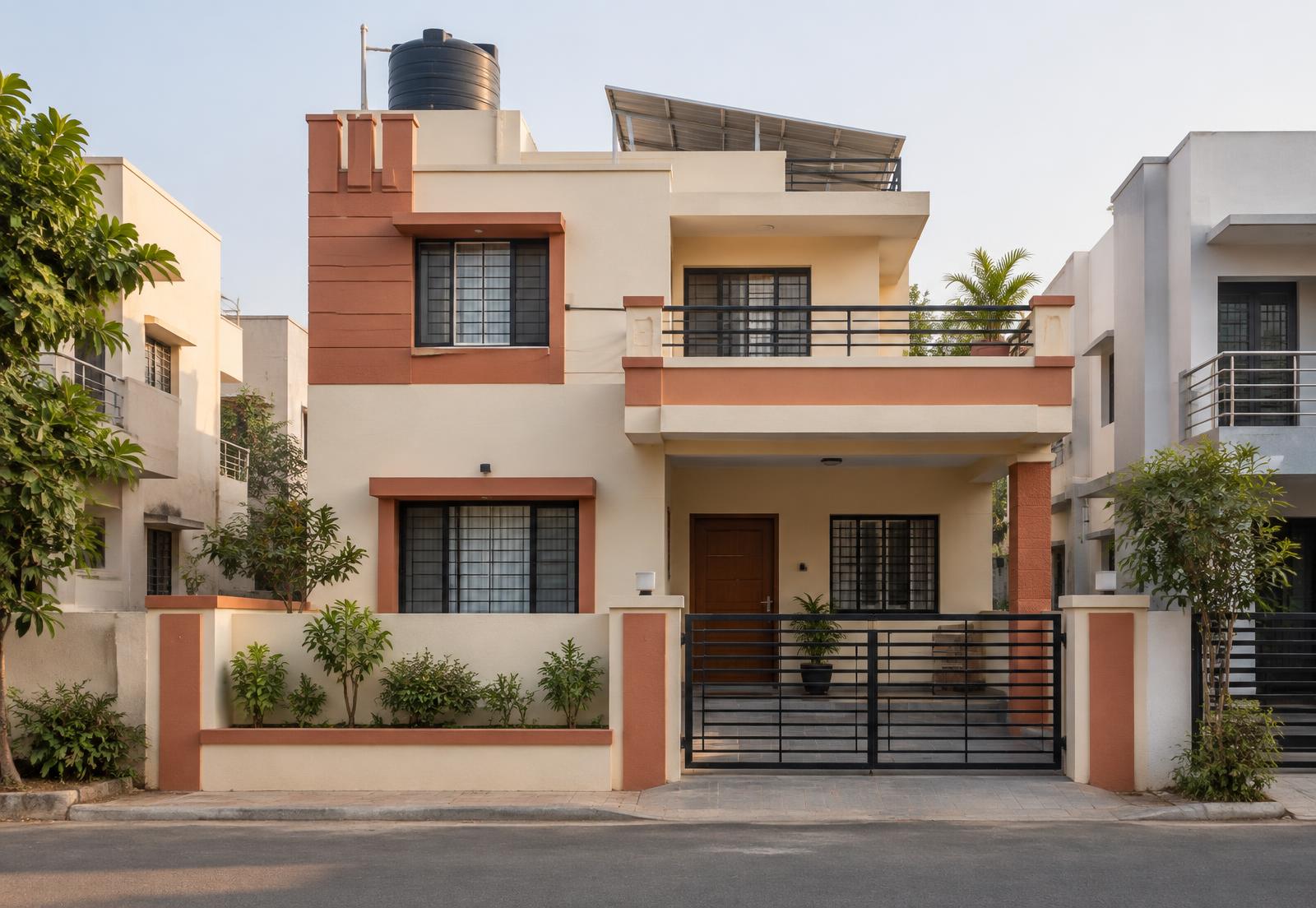
01 / 05
Roof
Usable space, direction and structure. A flat terrace and a tiled slope lead to very different answers.
01Roof
Usable space, direction and structure. A flat terrace and a tiled slope lead to very different answers.
02Sunlight
Neighbouring buildings, water tanks and trees can shade part of the roof at different times of day.
03Electricity use
How much you use, and when, matters more than the size of the house.
04Electrical setup
Your connection and meter decide what can be installed and how it links to the grid.
05Future needs
An EV, air-conditioning or a family member moving in can change what makes sense.
The household energy story
Where your electricity comes from changes with the sun.
Solar shifts where some of your daytime electricity comes from. It doesn’t make a home independent of the grid.
Sun
Daylight reaches the panels.
Roof
Panels turn light into electricity.
Home
Your household uses it first.
Grid
Surplus may go out, where rules allow.
Illustrative. Export, backup and storage depend on your equipment, connection and current local rules.
Beyond one home
One roof is small. A city of roofs isn’t.
Zoom out from a single terrace and see how rooftop generation adds up — without the slogans.

A single terrace making some of its own electricity from daylight, close to where it’s used.
No made-up impact numbers. What your roof contributes depends on the system and the home.
The money question
Six things shape the numbers. Here’s when each becomes clear.
We won’t put a price, saving or payback on a page. Anyone who does hasn’t seen your roof.
- From your answers
- At the visit
- In the proposal
- 01
Your home and roof
Usable area, direction, shade and structure set what can be generated.
At the visit
- 02
Your electricity use
How much you use, and when, decides how much of the roof’s output you use yourself.
From your answers
- 03
What the system needs to do
Size, equipment and whether storage is needed drive the upfront cost.
In the proposal
- 04
Installation conditions
Roof access, mounting and wiring runs can add or remove work.
At the visit
- 05
Incentives and eligibility
Support may exist, but schemes and terms change. We check the current rules for your situation.
In the proposal
- 06
Your future choices
An EV, more air-conditioning or adding storage later shifts the picture over time.
From your answers
Homes, not hypotheticals
Every roof had a different reason.
We thought the water tank killed the idea. It just moved the panels.
Ananya & Kunal R. · Terrace flat · Baner, 411045
- What they cared about
- A summer bill that kept climbing with two air-conditioners.
- What made it different
- A shared terrace with a large water tank casting afternoon shade.
- What we considered
- Society permission, shade across the day, and where the panels could legally sit.
- What happened
- The visit found a clear strip on the east side. The society approved the layout.
“The specialist already knew which house was ours. That’s a first.”
Priya S., Hinjewadi
“Booked a call instead of a visit. No follow-up spam.”
Rahul M., Baner
“Clear about what they didn’t know until they’d seen the roof.”
Sneha K., Camp
Still wondering?
Straight answers, grouped by what you’re thinking about.
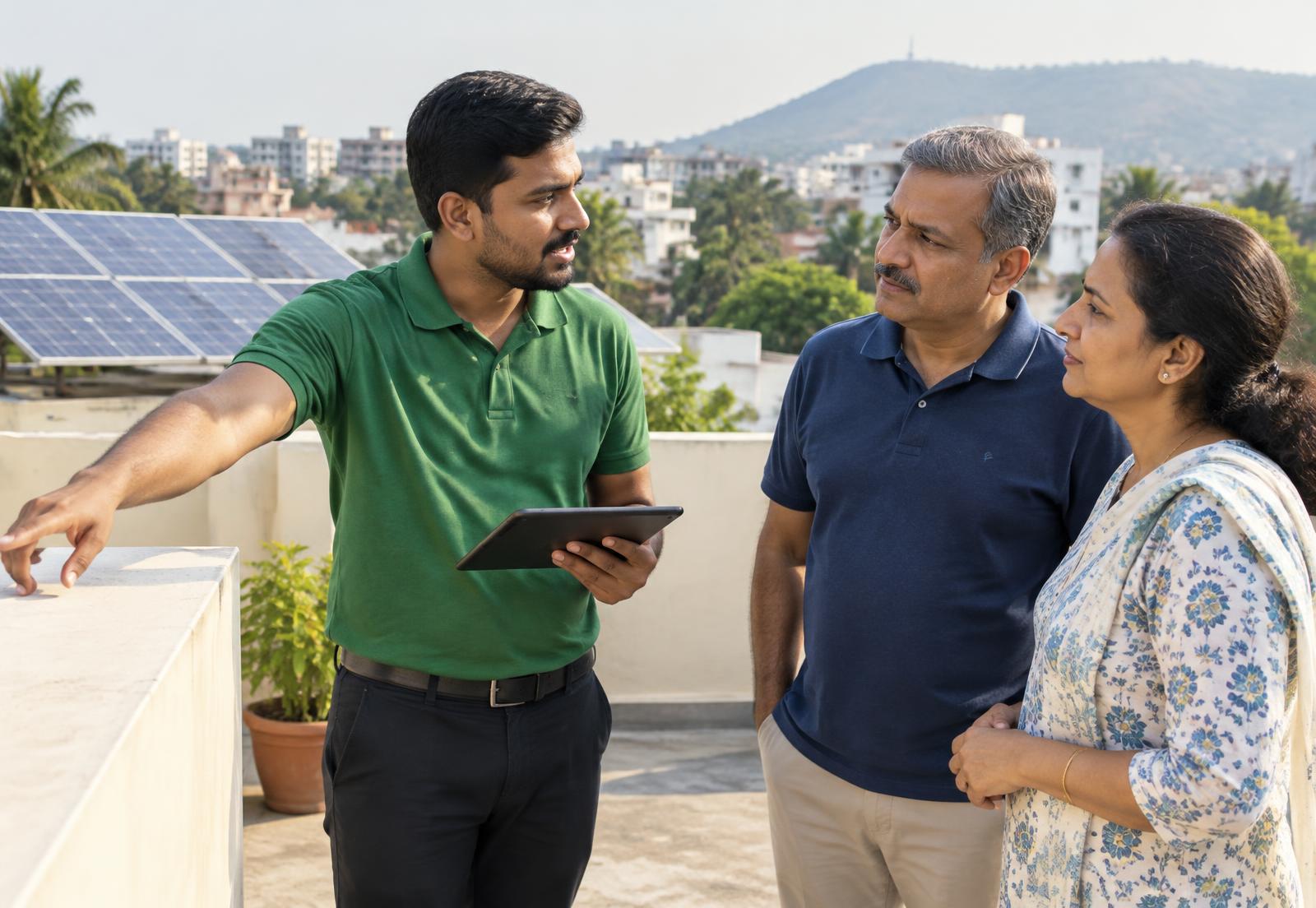
The only way to know
So — does solar make sense for your home?
- 01 Whether your roof can take panels
- 02 What it could realistically do for your household
- 03 What’s still uncertain, said plainly
About five minutes. No account, no obligation.